Our story · The Bamar people01 — 07

The Bamar People

History, culture, and everyday life

Myanmar is home to many peoples and traditions. This feature focuses on the Bamar people—their history, daily life, food, celebrations and culture as it continues to change today.

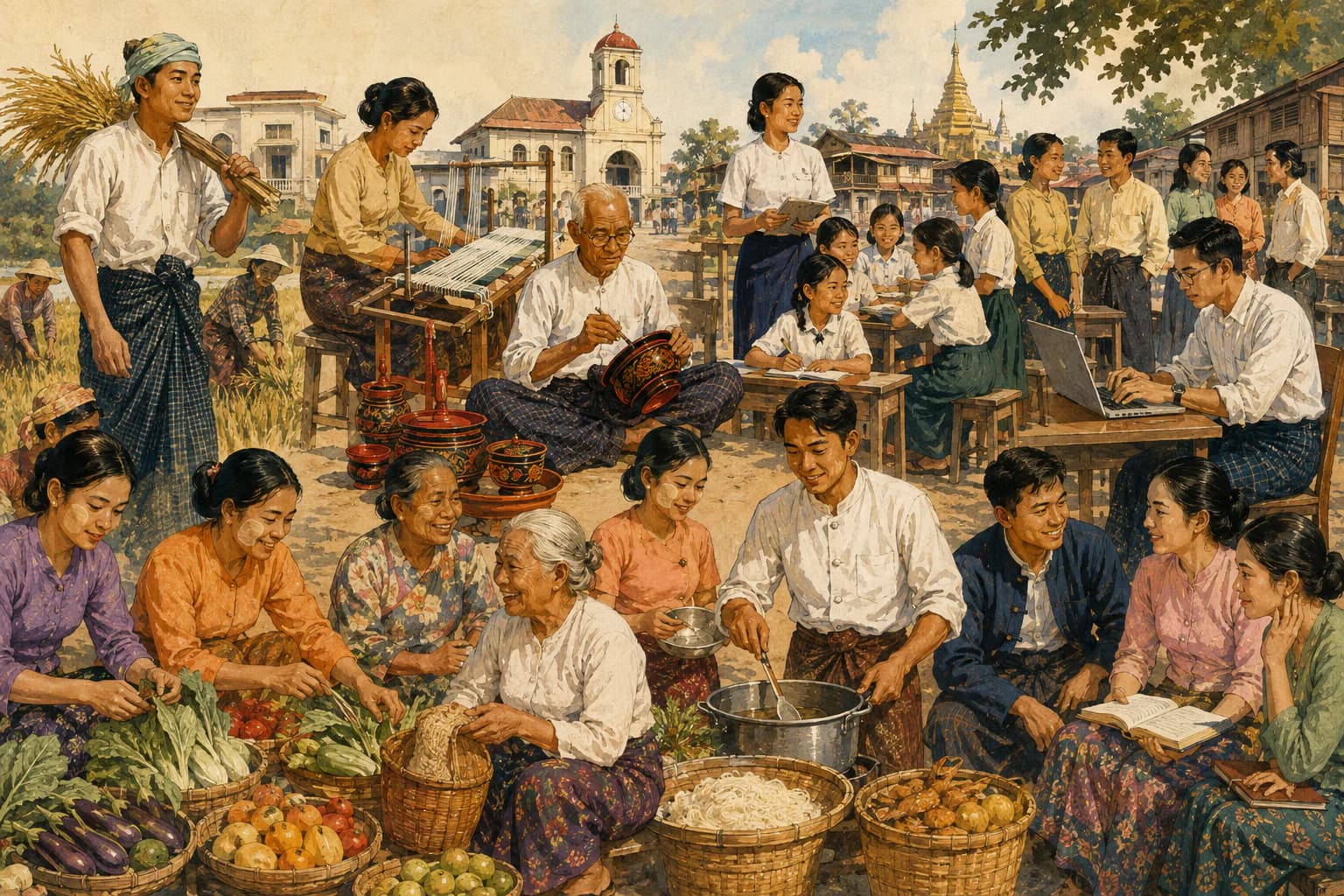
Editorial illustration of Bamar farmers, craftspeople, teachers, students, cooks, elders and contemporary professionals

01People and identity

Many lives. A shared culture.

The Bamar are Myanmar’s largest ethnic group, with communities across the country and deep historical roots in central and lower Myanmar. There is no single Bamar experience: rural and urban lives, regional customs and family histories all shape identity.

Language, Theravada Buddhist traditions, dress, craft, food and social customs offer points of connection. They are living practices—adapted, debated and renewed by each generation.
02Inherited knowledge

Made by hand. Kept in memory.

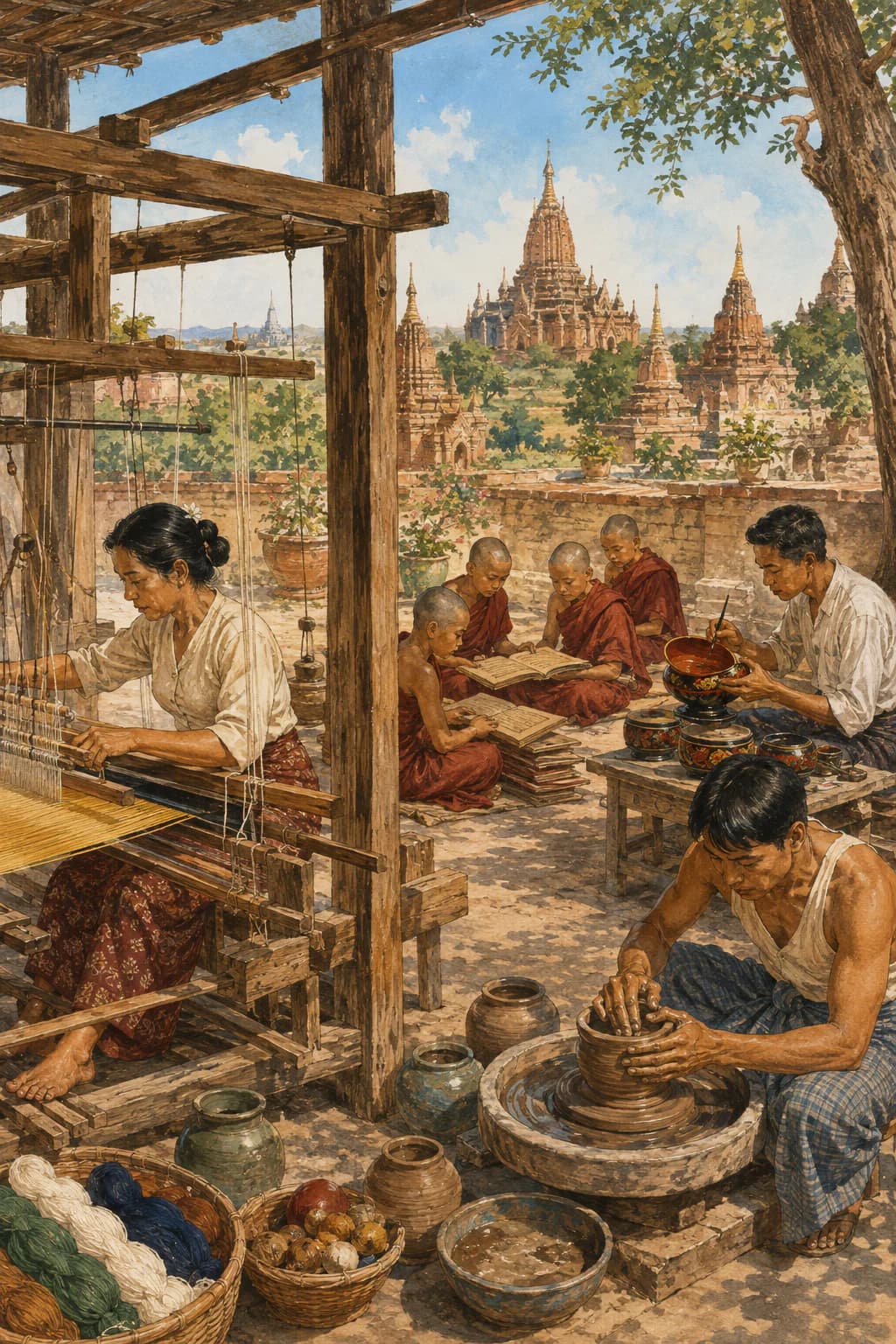
Editorial illustration of weaving, pottery, lacquerware and monastery study near Bagan

Across central Myanmar, the remains of royal cities stand beside living traditions of learning and craft. Monasteries have long been places of study, while makers refined weaving, pottery, lacquerware and manuscript arts.

These skills endured through patient practice: watched closely, learned by hand and passed from one generation to the next.

03Daily life

A culture lived every day

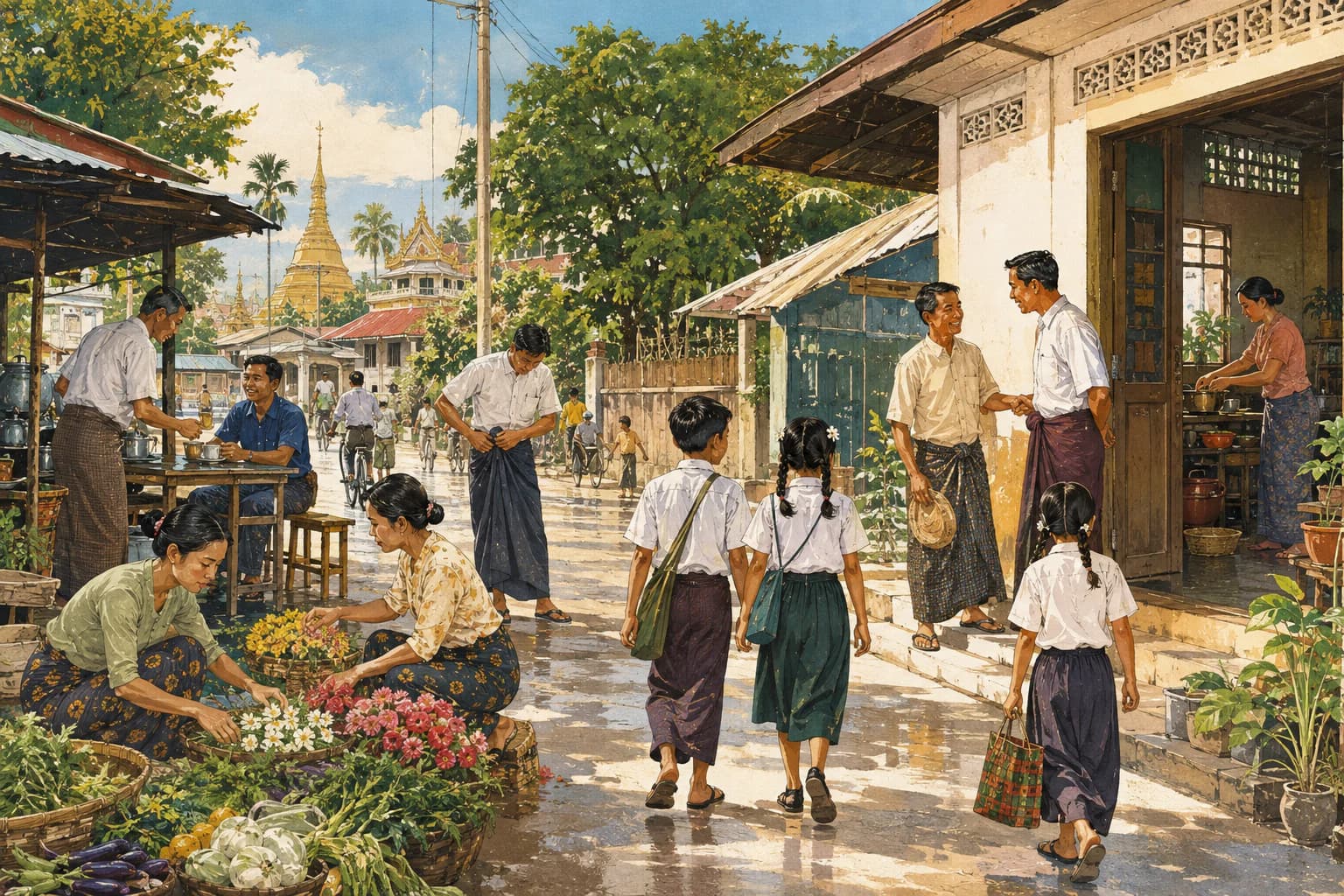
Comic-book illustration of a morning market, family kitchen, schoolchildren, farmers and neighbors

Culture lives not only in monuments, but in familiar routines: the morning market, rice prepared before the day begins, a longyi tied for work, children learning beside elders and neighbors gathering at dusk.

Repeated across ordinary days, these gestures turn memory into habit and strengthen the ties that hold a community together.

04The shared table

A table made for sharing

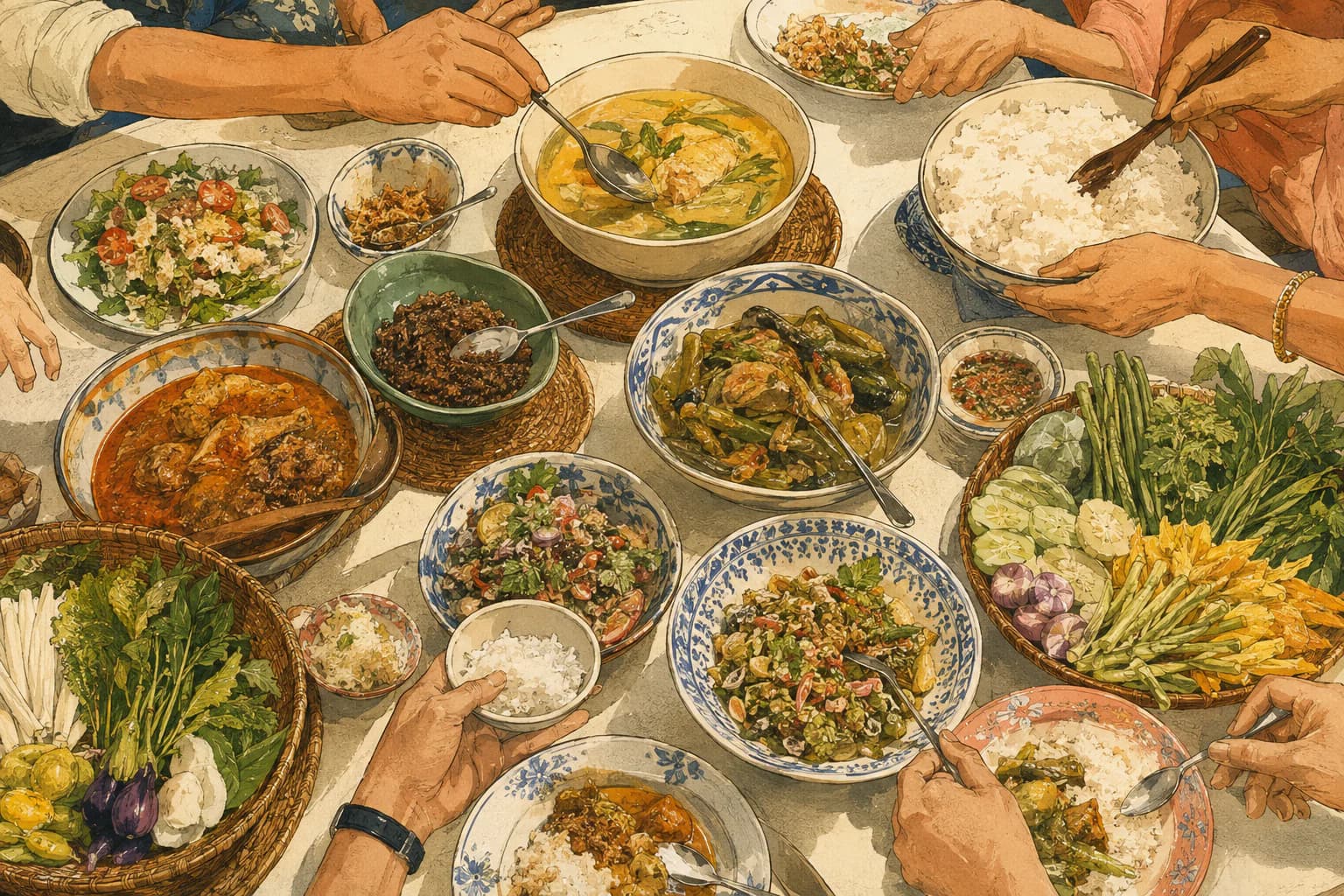
Overhead editorial illustration of hands sharing rice, curries, soup, salads and seasonal vegetables

A Bamar meal places rice at the center, surrounded by curries, soup, salads, relishes and seasonal vegetables. Each household brings its own balance of sourness, salt, heat and fragrance.

Recipes are rarely carried by measurements alone. They survive through watching, tasting and the quiet instruction exchanged between generations in the kitchen.

05Celebration

The seasons bring us together

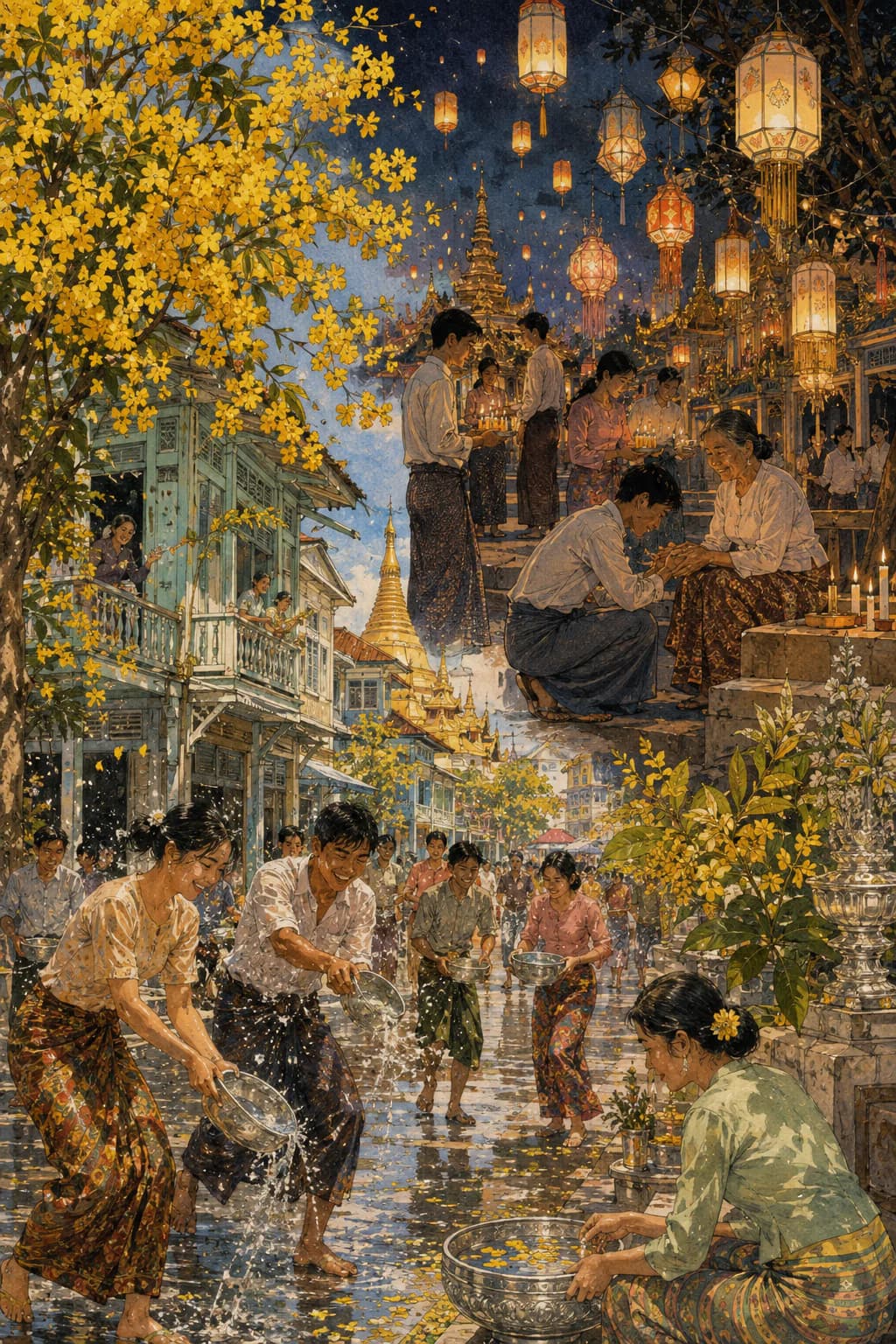
Comic-book illustration of Thingyan water, Thadingyut lanterns, offerings and family visits

Seasonal celebrations bring private memory into public life. Thingyan welcomes the new year with water and generosity; Thadingyut fills homes and streets with light, visits and acts of respect.

Music, shared meals and offerings differ from place to place. Together, they renew relationships with family, neighbors, teachers and community.

06Across generations

Carrying home across distance

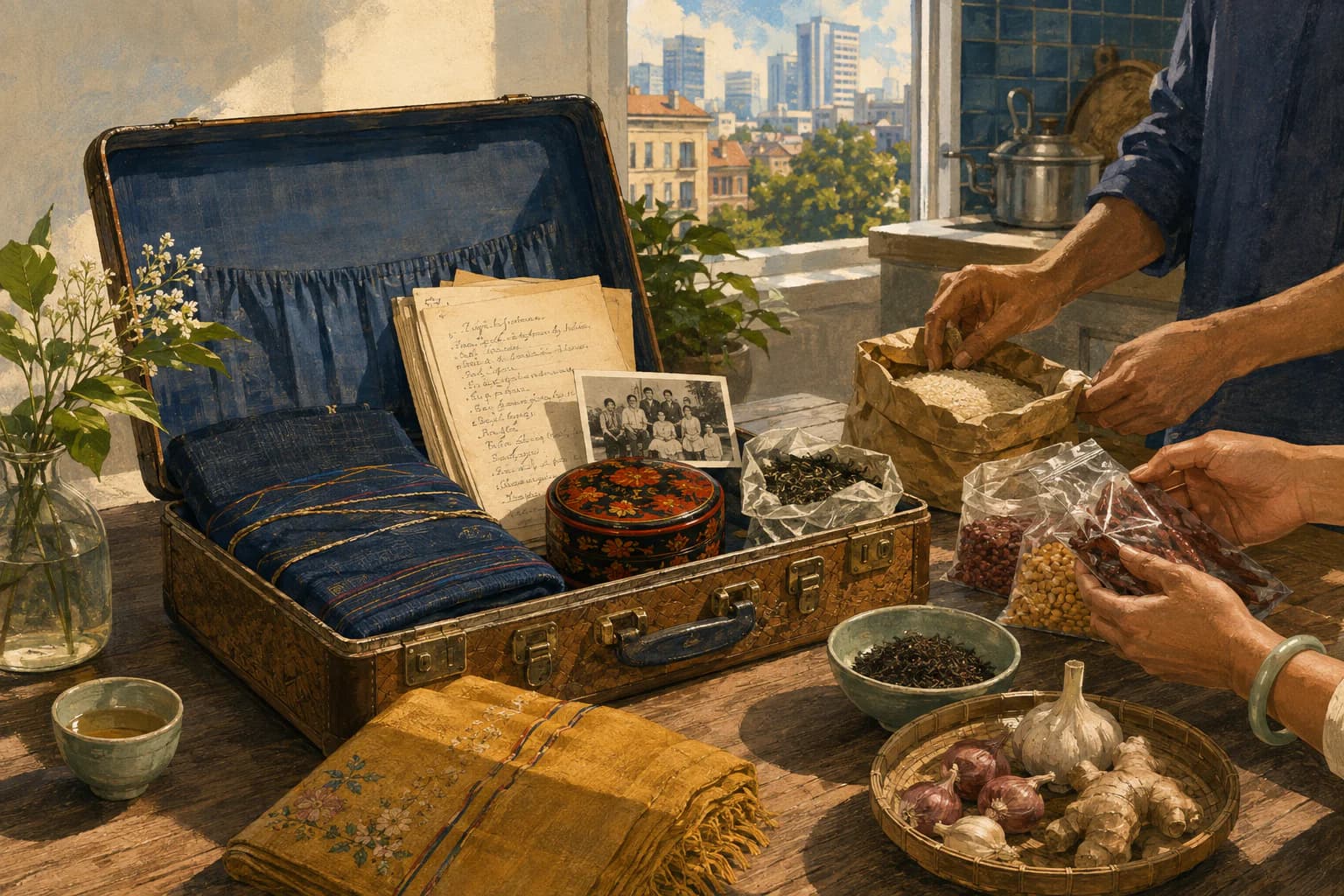
Editorial still life of an open travel case, folded longyi, family photograph, recipes and pantry ingredients

People carry home in more than luggage. A folded longyi, a handwritten recipe, a familiar song or the scent of a favorite dish can hold a place close across great distance.

For Bamar families living away from Myanmar, traditions adapt to new languages and surroundings. Their meaning endures through the choice to remember, remake and share.

07The present

The story continues

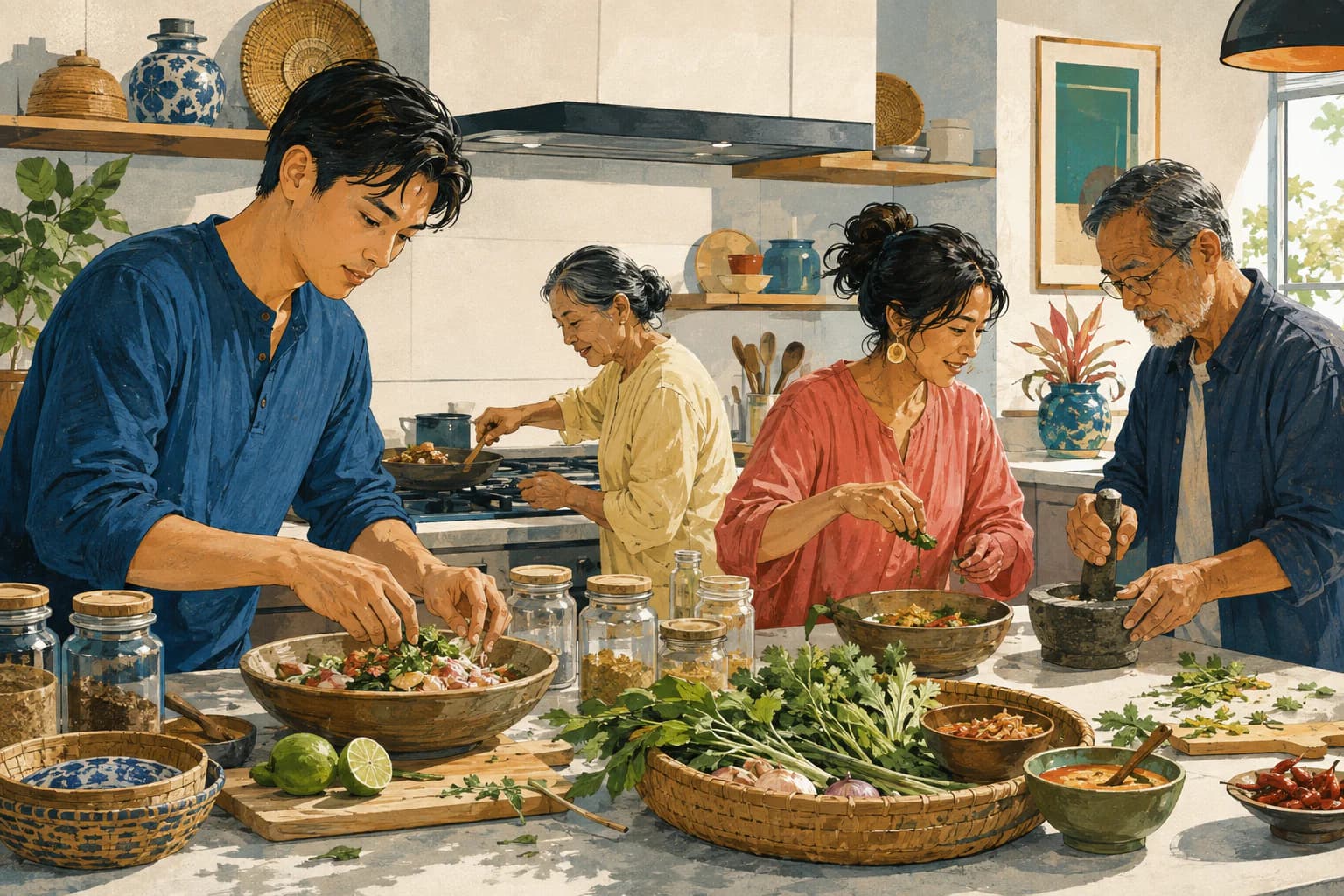
Editorial illustration of several generations preparing Burmese dishes in a contemporary kitchen

Today, an elder’s practiced hands may work beside a younger cook following notes on a phone. The tools change; the exchange continues.

Burmese Pantry enters the journey here—not as the owner of a culture, but as one family’s effort to keep familiar ingredients, stories and the pleasure of a shared table within reach.

Continue the story

Bring a familiar flavor to your table.

Explore pantry staples chosen for everyday Burmese cooking.

Explore the pantry